Description:
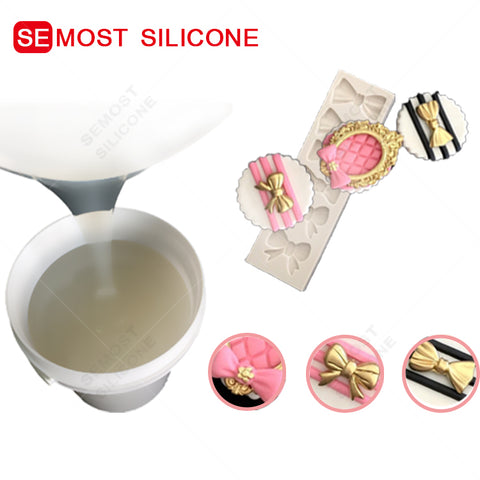
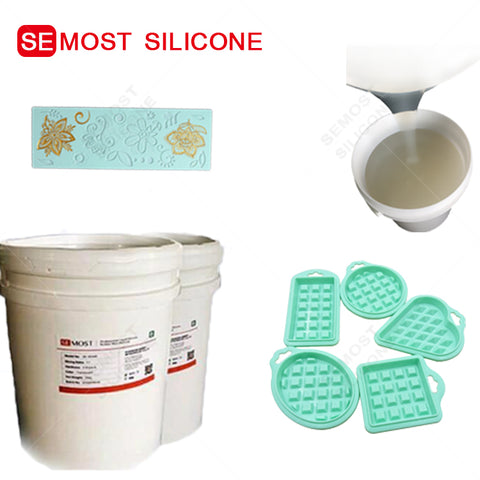
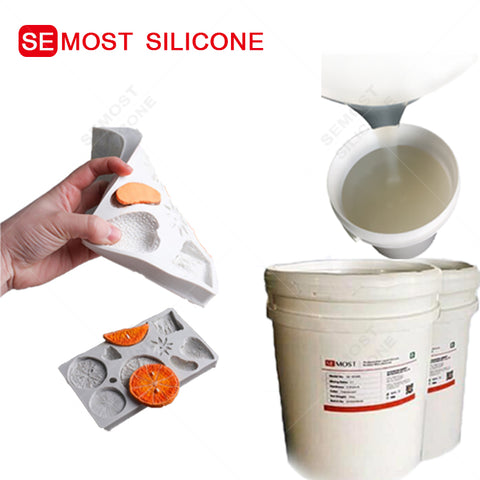
The food grade silicone for cake/ candy/fondant mould is a kind of liquid RTV addition cure mold making silicone rubber with two parts, part A is the silicone rubber base, part B is the platinum curing agent.
Also, since it is platinum cure silicone rubber, and in food grade with FDA certificate. It is very suitable to make food related products mould, such as chocolate, candy, cake, butter, fondant, butter, ice statues, cookies, etc.
The platinum cure silicone rubber's mixing ratio is 1:1 and its curing would be heavily impacted by the temperature.
Characteristics:
* low shrinkage (less than 0.1% )
*high tensile and tear strength with high copy times
*easy for operation (mixing ratio at 1:1)
*good fluidity easy for pouring operation
*platinum cure, food grade
Applications:
Cake mold
Chocolate moldmaking
Candy moldmaking
Baking moldmaking
Ice trays molding
Casting butters
Casting for Kitchen products
Datesheet:
| Model NO· | SE-620# | SE-625# |
| Mixing Ratio (by weight) | 1:1 | 1:1 |
| Appearance/Color | Translucent | Translucent |
| Hardness (Shore A) | 20±2 | 25±2 |
| Mixed viscosity (mPa·s) | 2000±500 | 2800±500 |
| Working Time(at23℃/75℉,MINS) | 30~40 | 30~40 |
| Curing Time (at 23℃/75℉, HRS) | 4~5 | 4~5 |
| Tensile strength, Mpa | ≥5.1 | ≥5.5 |
| Tear strength, KN/m | ≥24.8 | ≥26.5 |
| Shrinkage, % | <0.1 | <0.1 |
| Elongation at break, % | ≥640 | ≥510 |
Using instructions:
-
Pls clear the model and tool totally before operation to prevent cure inhibition.
2.Weigh the two part correctly by electronic weight in two separate container .
3. Mixing the two part in 1:1 and stir part A and part B evenly in 2-3 minutes .
4.And get the mixture for vacuum-pumping for de-air the bubble in around 2-3
minutes . (If there is no vacuum machine, pls pour the mixture carefully and slowly
down the side of the mold frame so that less bubbles caused)
5. Enclose the product (the original model) with four plastic plates or wooden plates.
6. Clean your products and brush a layer of release agent(detergent or soap water) on
your product.
7. Pour the vacuumed mixture into the model frame from the side of the mold frame .
Notice: As our it is platinum cure silicone , which is very easy to cause
cure inhibition , so pls do remember thoroughly clean the model and tool before
operation . Besides , pls avoid the liquid silicone contact or mix with the
following material , otherwise the silicone won’t be cured :
1. Liquid condensation silicone ( condensation silicone not completely cured or organic
tin compounds )
2 .Sulphur, sulfide and sulfur rubber materials.
3. Amine compounds as well as contains the amine materials.
4 .Pewter solder flux.What Shore hardness should I choose?
The appropriate hardness depends on the mold size, geometry, undercuts, desired flexibility and casting process. Softer grades are generally more flexible, while harder grades provide more support. Contact SIMOST if you need help selecting a grade.
What viscosity is best for mold making?
There is no universal best viscosity. Low-viscosity silicone can be useful for detailed pouring applications, while higher-viscosity materials may be suitable for brush-on or specialized applications. The correct choice depends on your process.
Can SIMOST customize platinum silicone?
Yes. Depending on the project, customization may include hardness, viscosity, cure characteristics, color, mechanical properties, temperature resistance and other application-specific requirements.
Can I get a sample before placing a bulk order?
Yes. Sample testing is recommended, especially when you are evaluating a new silicone material or changing suppliers.
Does SIMOST supply silicone in bulk?
Yes. SIMOST can discuss bulk supply requirements with distributors, mold manufacturers, industrial customers and other B2B buyers.
Can you provide technical data?
Yes. Technical documentation such as product specifications and TDS can be provided for applicable products.
How do I choose a platinum silicone manufacturer in China?
Compare suppliers based on product consistency, technical data, formulation capability, sample support, quality control, customization, technical assistance and long-term supply capability—not only unit price.
How can I get a recommendation for my application?
Send us your application, mold size, desired hardness, casting material and approximate order quantity. Our team can recommend a suitable silicone grade or sample for evaluation.